The ‘No Kings’ Movement: 7 Million Americans Demand Democracy and Accountability
On October 18, 2025, more than 7 million Americans descended on streets across the United States in what organizers describe as one of the largest single-day protests in American history. The “No Kings” demonstrations, coordinated across approximately 2,700 locations in all 50 states, sent a powerful message: America has no kings, and democracy remains the people’s ultimate power.
What Sparked the Uprising?
The October protests mark the second major wave of the No Kings movement, following an initial rally in June 2025 when roughly 5 million people took to the streets. The renewed mobilization reflects escalating concerns about what organizers view as authoritarian governance, including aggressive immigration enforcement, military deployments in Democratic-led cities, federal workforce reductions, and what many protesters describe as an erosion of constitutional rights.
The movement grew from the efforts of approximately 200 organizations working in coordination, including the American Civil Liberties Union (ACLU), Indivisible groups, the American Federation of Teachers, Planned Parenthood, the Democratic Socialists of America, the Human Rights Campaign, and dozens of other advocacy groups.
A Peaceful, Diverse Movement Across America
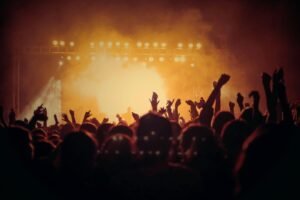
Despite warnings from Republican officials that National Guard troops might be necessary, the demonstrations remained remarkably peaceful and family-friendly. From crowded city centers to small rural towns, participants ranged from educators and legal professionals to military veterans, government workers, and retirees.
In Washington, D.C., approximately 200,000 people flooded the streets near the U.S. Capitol, many wearing yellow to symbolize solidarity. Chicago saw roughly 250,000 protesters in a march that stretched for two miles. New York City attracted over 100,000 demonstrators, who gathered at Times Square and other major locations. Yet the movement wasn’t limited to major cities—thousands of smaller rallies took place in parks, town squares, and public spaces across red and blue states alike.
The atmosphere was energetic and creative. Protesters waved homemade signs with messages like “Nothing is more patriotic than protesting,” “Make America Good Again,” and “We Want All of the Government to Function.” Some wore inflatable costumes, displayed the U.S. Constitution’s “We The People” preamble on huge banners for others to sign, and played marching band music.
What Protesters Want
The grievances uniting the movement span multiple policy areas. Participants voiced opposition to immigration raids and detention practices, the presence of federal troops in urban areas, cuts to education and environmental programs, concerns over voting rights, and fears about executive overreach.
Beyond specific policies, protesters emphasized a broader democratic principle: government should serve the people, not concentrate power in the hands of a single executive. As one lawyer participating in a Salt Lake City rally reflected, “We can discuss and debate policies and solutions. But we shouldn’t be questioning the worth of individuals.”
One 70-year-old retired civil servant from Michigan traveled ten hours to Washington, D.C., specifically to celebrate her birthday at the protest. “It appears to me that (Trump is) systematically dismantling our government and democracy, piece by piece. If we remain passive and do nothing, that will continue,” she explained.
The Administration’s Response
President Trump downplayed the movement, claiming shortly before the protests that few people would attend. On the evening of the demonstrations, he released an artificial intelligence-generated video depicting himself as a crowned monarch in a fighter jet, which drew criticism from both protesters and artist Kenny Loggins, who demanded his music be removed from the video.
Republican officials and media outlets largely dismissed the protests as “Hate America” rallies and made unsubstantiated claims linking them to Antifa and other far-left groups. Some suggested the protests were funded by billionaire George Soros or organized by paid operatives—accusations organizers and independent fact-checkers disputed.
Why This Matters for Democracy
The ACLU emphasized that these demonstrations represent democracy in action—citizens exercising their First Amendment rights to peaceful assembly and free speech at a time when those rights face increasing pressure. Ellen Flenniken, ACLU Justice Division leader, noted that millions of Americans refused to stay home despite administration fearmongering: “The best way to protect our First Amendment rights is to keep using them—and to do so peacefully, knowing the power of nonviolent protest to make repression backfire.”
The movement reflects a fundamental tension in American democracy: citizens asserting that power ultimately belongs to the people, not any individual, regardless of political office. Whether the demonstrations lead to policy changes remains to be seen, but the sheer scale and peaceful nature of October’s No Kings rallies make clear that millions of Americans remain actively engaged in defending democratic principles they believe are under threat.
Looking Forward
With more No Kings events planned and political tensions unlikely to dissipate soon, the movement appears to be establishing itself as a sustained opposition force rather than a one-time rallying cry. For New Yorkers and Americans nationwide, the October 18 protests demonstrated that when citizens feel democracy is endangered, they will take to the streets—peacefully and in staggering numbers—to demand accountability and protect the democratic ideals that define the American system.

Post Comment